
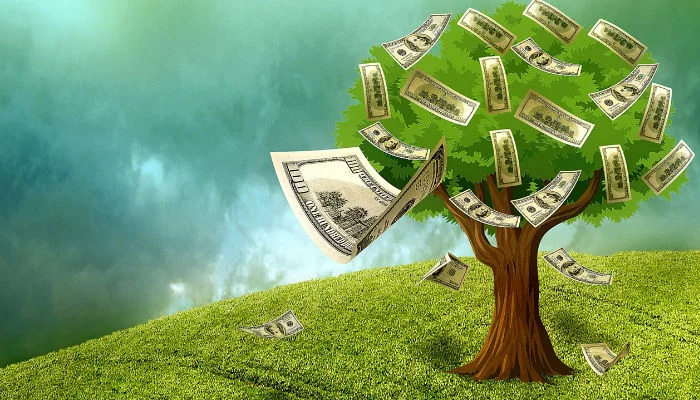
Money Growing On Trees Is NOT An Urban Legend
At J’s Tree Trimming and Removal, we are regularly faced with a need to remove trees that have acquired a disease. It’s a sad day when a mature, shade-giving tree has to be cut down in its prime due to illness.
At J’s Tree Trimming and Removal, we are regularly faced with a need to remove trees that have acquired a disease. It’s a sad day when a mature, shade-giving tree has to be cut down in its prime due to illness.
My heart was warmed most recently when reading an article from October 2016 about the United Nations conference on sustainable urban development.
Below are some highlights from the article and a link to the full article. It discusses sustainability and the need for urban green spaces which are essential for mental and physical health, not to mention community building and supporting ecological needs.
The importance of urban forests: why money really does grow on trees
Amy Fleming
Last modified on Wednesday 12 October 2016 09.53 EDT
Mature trees clean air, lower stress, boost happiness, reduce flood risk – and even save municipal money. So why are they cut down when cities develop – and how should the UN’s new urban agenda protect them?
The skyline along Manhattan’s Upper Fifth Avenue, where it flanks Central Park, is dominated by vast, verdant clouds of American elm trees. Their high-arched branches and luminous green canopies form – as historian Jill Jones puts it – “a beautiful cathedral of shade”. When she started researching her new book, Urban Forests, she’d have struggled to identify the species – but now, she says, “when I see one, I say ‘Oh my goodness, this is a rare survivor,’ and deeply appreciate the fact that it’s there.”
The American elm was once America’s most beloved and abundant city tree. It liked urban soil, and its branches spread out a safe distance above traffic, to provide the dappled shade that cities depended on before air conditioning.
Now, however, most of the big, old elms have been wiped out by Dutch elm disease. Many of them were replaced by ash, which have in turn been killed by another imported pest: the emerald ash borer. By the 1970s, writes Jones, much of America’s urban tree cover had fallen victim to “disease, development and shrinking municipal budgets”.
Thousands of miles away, in Bangkok, the main threat is construction work. After a group of residents tried in vain to save several mature trees on their lane, which were felled to make way for a car park, they formed a tree advocacy group, the Big Trees Project.
Within weeks, membership swelled to 16,000. Forestry officer at the Food and Agriculture Organisation of the United Nations (FAO), Simone Borelli tells me of similar tree advocacy groups in Malaysia, India and Central African Republic, where the capital, Bangui, has “grown out of the forest and is eating it up”.
This month will see representatives from the world’s cities convene in Quito, Ecuador, for the United Nations conference on sustainable urban development, Habitat III. An agreement called the New Urban Agenda will be launched, to address the challenges facing a growing global urban population that already accounts for over 50% of us....
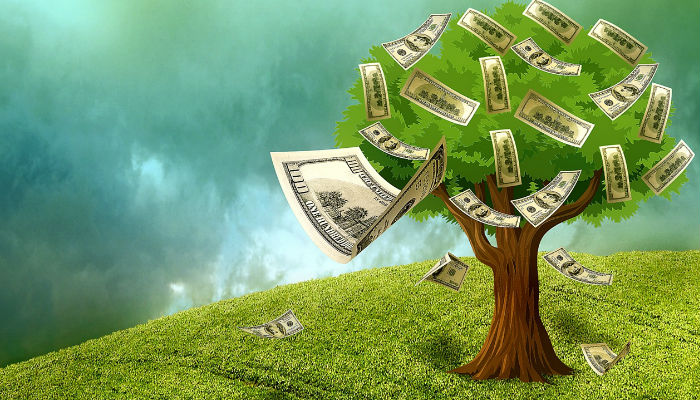
...It’s hard to put a price on how an avenue of plane trees can muffle the roar of a main road, although trees do on average increase the value of property by 20%. Perhaps money does grow on them after all.
Read more: https://www.theguardian.com/cities/2016/oct/12/importance-urban-forests-money-grow-trees

Proud Member of TCIA
J’s Tree Trimming and Removal, Inc. is a proud member of The Tree Care Industry Association (TCIA).

J’s Tree Trimming and Removal, Inc. is a proud member of The Tree Care Industry Association (TCIA).
TCIA’s mission is simple
To advance tree care businesses.
TCIA’s mission helps ensure that J’s mission can be fulfilled when providing our customers with the highest quality of professional, reliable and safe tree care.
As an association established in 1938 that has over 2,300 tree care firms and affiliated companies, TCIA provides it’s members with information about
- the latest tree care and removal equipment,
- techniques and recommendations on how to control loss thereby reducing insurance claims and increasing safety,
- suggestions on safety to not only insure your property is protected but our skilled team of tree trimmers are as well, and
- much more.
One such article, Storm Prep: At a Moment’s Notice, Is Your Fleet “Good to Go?” reminded us to walk through our company’s preparedness as we enter the Michigan winter and ice storm season.
As a tree care professional, having our equipment and personnel prepared is only one aspect of our job. The other is to ensure your property is prepared to avoid any potential damage or accidents from sick, dying or aging trees. At J’s, we want to avoid tragic mishaps like the one that occurred in July of 2013 when a woman, who was walking her dog in a Minnesota park, was killed when a large branch fell on her.
In Michigan, where there is 11.9 million acres of forest land owned by families or corporation or other private groups, there are many threats to our trees
- Invasive insects such as the bright-green emerald ash borer or the Asian longhorned beetle
- Diseases such as Oak Wilt or Beech Bark disease
Have a tree care professional provide a consultation today, don’t wait until it’s too late.
